


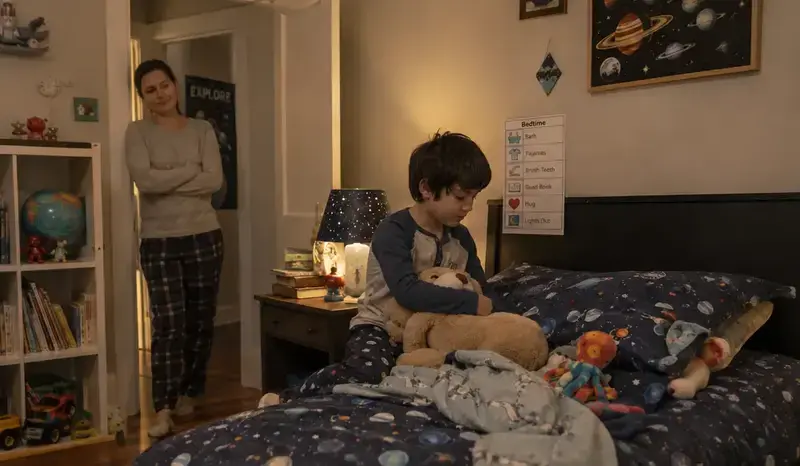
Sleep can become one of the hardest parts of the day when a child takes a long time to fall asleep, wakes repeatedly, or is wide awake long before the rest of the household. Autism can be associated with sleep difficulties, but there is rarely one universal reason. The most useful approach is to identify the pattern, look for possible contributors, and choose support that fits the individual child.
Sleep is also connected to the broader routines children use throughout their day. If eating, hygiene, dressing, toileting, or other routines are challenging too, AIA's guide to daily living challenges in autism provides additional strategies for building independence within everyday activities.
Sleep problems in autistic children can include trouble falling asleep, frequent night waking, early waking, and restless sleep. Helpful first steps include tracking patterns, building a predictable bedtime routine, adjusting the sensory environment, and addressing daytime habits. Persistent sleep problems, snoring, or signs of discomfort should be discussed with a healthcare professional.
What sleep problems are common in autistic children?
Autism sleep issues can look different from one child to another. Some children resist bedtime or need a long time to settle. Others fall asleep easily but wake for extended periods during the night. Early waking, irregular sleep and wake times, restless sleep, nightmares, and difficulty returning to sleep can also occur.
| What you notice | Possible contributors to explore | A useful first step |
|---|---|---|
| Trouble falling asleep | Bedtime timing, stimulation, anxiety, screens, naps | Track sleep onset and simplify the bedtime routine |
| Frequent night waking | Sleep associations, discomfort, noise, toileting, medical conditions | Record when waking happens and what helps |
| Very early waking | Sleep schedule, light exposure, bedtime timing | Review regular sleep and wake times and the room environment |
| Restless sleep | Sensory discomfort or movement-related sleep problems | Discuss persistent restlessness with a healthcare professional |
| Snoring, gasping, or pauses in breathing | Possible sleep-disordered breathing or sleep apnea | Contact the child’s pediatrician |
Why can sleep be harder for autistic children?
Sleep is influenced by biology, health, behavior, environment, and daily routines. For some autistic children, sensory differences make ordinary bedroom conditions unusually alerting. A sheet seam, appliance hum, hallway light, room temperature, or smell that another person barely notices may interfere with settling.
Anxiety, changes in routine, uncertainty about what happens next, or difficulty communicating discomfort can also make bedtime harder. Circadian rhythm differences may contribute to irregular sleep timing in some autistic people. Late naps, caffeine, low daytime activity, inconsistent wake times, and stimulating screen time close to bedtime can add to the problem.
Families who notice that sound, light, texture, temperature, or other sensations affect their child's comfort may find AIA's overview of sensory processing in autistic children helpful for thinking about environmental adjustments more broadly.
Quick tip: Treat bedtime as a pattern to understand, not a behavior to “win.” A small, repeatable change is easier to evaluate than changing five parts of the evening at once.
Do not overlook medical contributors
Not every sleep problem is primarily behavioral. Reflux or other discomfort, epilepsy, eczema, allergies, asthma, sleep apnea, restless legs syndrome, anxiety, ADHD, and medication side effects can affect sleep.
A sudden change deserves attention. If a child previously slept reasonably well and begins waking, crying, pacing, snoring, or resisting bed, ask what changed before assuming the problem is simply part of autism.
The American Academy of Pediatrics recommends considering factors such as snoring, restless sleep, night waking, household conditions, bedtime routines, co-occurring conditions, and medications when evaluating sleep difficulties in autistic children. See the American Academy of Pediatrics guidance on identifying, evaluating, and managing autism spectrum disorder for additional clinical context.
Start with a simple sleep diary
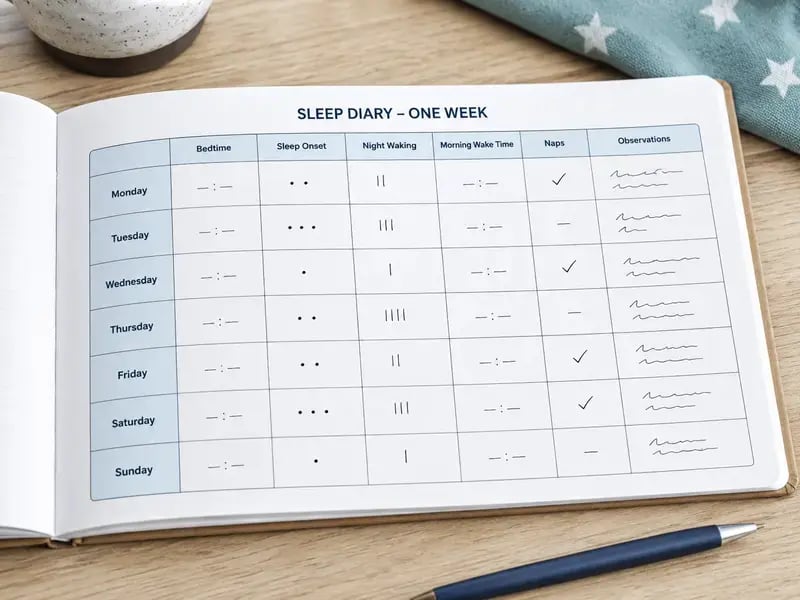
For one to two weeks, record bedtime, approximate time the child falls asleep, night waking, morning wake time, naps, and anything unusual that might matter, such as illness, schedule changes, medication timing, or a particularly stimulating evening.
Look for repeated relationships. Does sleep improve after active days? Does waking happen at roughly the same time? Is bedtime taking longer on days with a nap? A sleep diary can also give a pediatrician, sleep specialist, or behavioral clinician more useful information than a general statement that the child “never sleeps.”
A sleep diary can also give a pediatrician, sleep specialist, or behavioral clinician more useful information than a general statement that the child "never sleeps." The American Academy of Pediatrics' healthy sleep habits guidance for families likewise notes that pediatricians may ask families to keep a sleep log when investigating sleep concerns.
What can families try first?
For many children, behavioral sleep strategies and good sleep hygiene are appropriate first steps after obvious medical concerns have been considered. The American Academy of Neurology practice guideline recommends addressing contributing medical conditions and medications and using behavioral sleep strategies before medication-based approaches for autistic children and adolescents.
The American Academy of Neurology practice guideline for sleep problems in autistic children and adolescents recommends evaluating contributing medical conditions and medications and using behavioral sleep strategies as a first-line approach.
Build a predictable bedtime routine
Keep the sequence short enough to repeat consistently. A routine might include toileting, pajamas, brushing teeth, one quiet activity, and lights out.
A visual schedule can help children who understand routines more easily when they can see what is happening now and what comes next. The specific activities matter less than predictability and whether they are actually calming for that child.
For more ideas on using routines, visual supports, communication, and other practical strategies at home, see AIA's parent and caregiver guide to supporting autistic children.
Make the sleep environment sensory-friendly
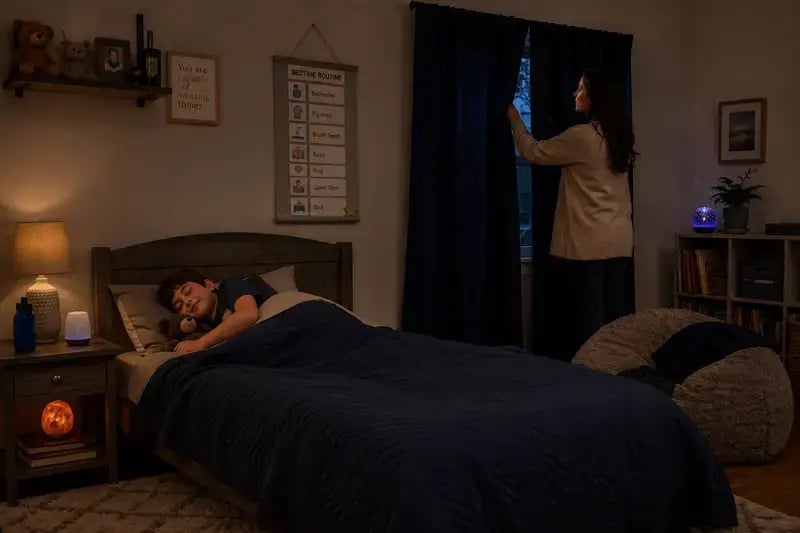
Consider light, noise, temperature, bedding texture, clothing, smells, and distracting objects. Some children settle best in near darkness and quiet. Others are more comfortable with a dim night-light or steady background sound.
There is no single “autism-friendly” sleep environment. The goal is to reduce unnecessary stimulation without adding sensory input the child dislikes.
Support sleep during the day
Regular morning wake times, daylight exposure, appropriate daytime activity, predictable meals, and avoiding late or long naps can help strengthen the sleep-wake pattern. Caffeine and stimulating activities close to bedtime can interfere with sleep for some children.
What if my autistic child won’t sleep even with a routine?
A routine is helpful only when it addresses the actual problem. A child who spends a long time awake in bed may not be physiologically ready to sleep at that bedtime. Repeatedly leaving the room might involve anxiety, reassurance, preferred activities, toileting, or a strong sleep association.
Behavioral approaches such as gradual bedtime changes, shaping independent sleep routines, visual supports, and consistent responses to night waking can be useful. More intensive behavioral procedures should be individualized, especially when severe distress, self-injury, elopement risk, or other safety concerns are present.
If communication is contributing to bedtime frustration, AIA's guide to building communication skills in autistic children discusses practical ways families can create opportunities for children to communicate needs using the methods available to them.
Reassurance: Progress does not have to mean a perfectly independent bedtime. A workable plan should improve rest while remaining realistic for the child and family.
When should sleep problems be evaluated medically?
Talk with the child’s healthcare professional when sleep difficulties are persistent, worsening, significantly affecting daytime functioning, or accompanied by signs of discomfort or a possible sleep disorder.
Frequent snoring, gasping, choking, pauses in breathing, marked daytime sleepiness, persistent restless sleep, unusual nighttime movements, suspected seizures, reflux symptoms, or a sleep change following a medication change all deserve discussion.
Important: A bedtime routine cannot treat sleep apnea, uncontrolled reflux, seizures, or another medical condition. Behavioral and environmental strategies should complement appropriate medical evaluation, not replace it.
What about melatonin for autistic children?
Melatonin can help some autistic children with insomnia, particularly difficulty falling asleep. Clinical guidelines recommend first addressing contributing health conditions and medications and using behavioral strategies.
Parents should discuss melatonin with the child’s healthcare professional rather than choosing a dose independently. In the United States, over-the-counter melatonin is sold as a dietary supplement, so product content and purity can vary. A clinician can help decide whether it fits the sleep problem and how improvement will be monitored.
Better sleep usually comes from solving the right problem
Sleep problems autism searches often lead families to long lists of tips. The more useful question is: what is making sleep difficult for this child?
Define the pattern, track it briefly, make the bedtime routine and sleep environment predictable, and support healthy daytime habits. If the pattern suggests discomfort, breathing problems, medication effects, or another health concern, involve the child’s medical team.
For children who also receive behavioral services, coordination can help families use consistent visual supports, communication strategies, and routines across caregivers. Sleep goals should remain individualized and should not substitute for medical care when a health-related cause is possible.
How Arizona Institute for Autism can help
Sleep difficulties can be influenced by routines, communication needs, sensory differences, learned patterns and changes throughout the day. Understanding what happens before bedtime, during night waking and the following morning can help families identify patterns worth addressing.
At Arizona Institute for Autism, the goal is not simply to make a child stay in bed or fall asleep on command.
Depending on the child's individual needs, ABA and caregiver support can help families develop predictable bedtime routines, use visual supports, strengthen communication around discomfort or needs, adjust responses to night waking and build practical strategies that are realistic for the whole family.
When medical concerns such as persistent snoring, breathing changes, seizures, reflux, pain or medication effects may be contributing, families should involve the child's healthcare provider. Behavioral support can complement appropriate medical care, but it should not replace evaluation of a possible health-related sleep problem.
When appropriate, collaboration among caregivers, behavioral clinicians and the child's medical team can help everyone work from a more complete understanding of the factors affecting sleep.
If bedtime routines, night waking or other sleep-related behaviors are becoming difficult to manage, schedule a consultation with Arizona Institute for Autism to discuss how individualized behavioral and caregiver support may help.